Now open in offline mode (no live sessions) due to high demand — enroll anytime and earn the same certificate.
Mastering Claude Code — From CLI to Loop Engineering
A deep, practitioner-first curriculum built on the real workflows Anthropic engineers use internally — including the latest and hidden gems most tutorials skip entirely. Goes well beyond the official docs.
Based on your location (India), you qualify for a Purchasing Power Parity discount.
Secure checkout via Razorpay
India checkout supports cards, UPI, net banking, and eligible EMI through Razorpay.
About this program
Most Claude Code tutorials stop at slash commands and CLAUDE.md basics. This cohort goes much further. It's built on the real workflows Anthropic engineers use internally, including techniques the Claude Code team developed but rarely documents publicly: Boris Cherny's loop-engineering workflow, worktree subagent isolation, the /simplify pattern, auto-dream memory curation, and dozens of other insider gems. Each one is tagged so you always know what's mainstream practice and what's insider knowledge. It runs in offline mode. No live sessions, enroll anytime, and work through all 10 modules and 56 lessons at your own pace. You'll end with the same verifiable certificate as our live cohorts.
Who is this for?
Software engineers and technical builders who already use (or want to seriously adopt) Claude Code and want to go past the official docs into the workflows Anthropic engineers actually use day to day
What you'll actively build & learn
Context & Memory Discipline
Structure CLAUDE.md, manage context as a scarce resource, and use auto-memory and /dream instead of letting sessions drift.
Deterministic Hooks & Skills
Write hooks that enforce behavior instead of hoping the model follows instructions, and package reusable skills, slash commands, and plugins.
Parallel & Multi-Agent Workflows
Run parallel sessions safely with git worktrees and subagents, and coordinate agent teams on real work.
Loop Engineering
Design autonomous, self-verifying loops with /loop, /goal, and /schedule instead of hand-holding every turn.
Time Commitment & Schedule
Self-Paced Modules
Flexible
No live sessions — work through all 10 modules and labs whenever suits you, in any order you need.
Hands-On Labs
~20 hrs total
Every module ends with a lab: real hooks, real worktrees, real subagent teams, real loops — built against your own projects.
Module-Based Syllabus
Each module is structured around three things: what you'll cover, what capability you'll walk away with, and the concrete deliverable that moves you toward a working system of your own. Work through them in any order, at any pace.
10 self-paced modules, 56 lessons, work through them in order or jump to what you need
A personal Claude Code setup — CLAUDE.md, hooks, skills, and loops — tuned to how you actually work
Terminal-first, hands-on lessons with labs in every module — no live sessions
The Claude Code mental model
- Orient yourself correctly before writing a single command: the three interaction modes (Claude Code, claude.ai, the API), installation across CLI/Desktop/IDE, the four permission modes including the auto-classifier most people never discover, the context window as your scarcest resource, model and effort-level selection, and the environment variables that quietly change everything.
A clear mental model for what Claude Code is, how it differs from chat and the API, and how to configure it correctly from session one.
A completed /init run on a real project with a reviewed and tuned CLAUDE.md.
CLAUDE.md mastery
- The single highest-ROI investment in your setup: what CLAUDE.md is versus AGENTS.md, the 200-line ceiling and context rot, what belongs in memory versus what the linter already owns, domain-specific lazy loading, writing mistakes back into memory so corrections compound, and auto-memory/dream curation between sessions.
A lean, high-signal CLAUDE.md that compounds in value across sessions instead of rotting.
An audited and rewritten CLAUDE.md with domain references and a compact policy.
Session and context management
- Managing context like it is money: the session commands (/clear, /compact, /rename, /resume, /recap), the two-failure rule, writing a smart /compact policy, deciding between @file mentions and free search, cross-session task registers, and tracking burn rate live with /usage and /cost.
The discipline to run long, multi-step sessions without context rot or runaway cost.
A completed multi-step feature session with deliberate /compact and /clear usage.
Hooks
- The difference between advisory and guaranteed: the five hook events, writing hooks against stdin JSON with exit codes and hookSpecificOutput, practical patterns like auto-format and migration guards, routing permission requests through a safety-classifier hook, and checking hooks into git so the whole team gets the same enforcement.
Deterministic control over the agent lifecycle instead of hoping instructions are followed.
Three working hooks: auto-format, a folder guard, and a session-stop notification.
Skills, slash commands, and plugins
- Your reusable workflow layer: choosing between a prompt template, a skill, a subagent, or a hook, the anatomy of a SKILL.md with progressive disclosure, slash commands with inline Bash, the /simplify pattern Anthropic engineers run after nearly every change, context:fork for isolated skill runs, and building a plugin marketplace.
A personal library of skills, commands, and plugins that turn repeated work into one-line invocations.
A custom skill, a /commit-push-pr command, and a daily-workflow command.
Parallel development with git worktrees
- Claude's biggest productivity unlock: why parallel sessions on one checkout cause chaos, built-in worktree support (claude -w, --tmux), Boris Cherny's 5-tabs setup, scoping per-worktree CLAUDE.md so each agent has narrow permissions, worktree support for non-git VCS, and teleporting sessions between claude.ai/code and the terminal.
The ability to run 3-5 isolated Claude sessions on the same repo without collisions.
Three worktrees running in parallel in tmux — a feature, a bug fix, and docs — with notification hooks.
Subagents and agent teams
- From "use subagents" to multi-agent factory workflows: when to offload verbose work to keep main context clean, the full subagent frontmatter spec including isolation:worktree, why narrow specialists beat generic "senior engineer" agents, test-time compute via separate write/review agents, research-preview agent teams coordinating through git, and the SPEC test for decomposing tasks.
Comfort designing and dispatching teams of specialized agents instead of one generalist.
A PR review agent team — logic, security, and performance subagents each posting inline comments.
MCP integration and the external tool ecosystem
- Connecting Claude Code to the real world: MCP fundamentals and claude mcp add, high-value integrations (Notion, Figma, GitHub, Slack, databases), choosing between a skill and an MCP server, startup resilience and parallel reconfiguration in subagents, using other models as tools via MCP, and communication bridges like Telegram and webhooks.
A working set of MCP integrations wired into real workflows, with a clear sense of their limits.
A Figma MCP implementation verified end-to-end with a browser-automation subagent.
Loop engineering
- The paradigm shift Boris Cherny crystallized: the three phases of Claude Code usage, /loop for recurring local tasks, /goal as a stop-condition primitive checked by a separate verifier model, /schedule for cloud-based recurring jobs, dynamic runtime task decomposition into parallel subagents, the verification imperative, and managing cost as it compounds in loops.
The ability to design autonomous, self-verifying workflows instead of prompting turn by turn.
A scheduled overnight loop that triages CI failures and spawns fix subagents in isolated worktrees with a verifier.
Insider playbook
- The techniques that took Anthropic to roughly a 70% productivity gain per engineer: the interview-first spec pattern, vertical-slice over horizontal planning, scrapping mediocre fixes for elegant ones, using Claude as an adversarial reviewer, settings.json for harness-enforced behavior, autonomous memory curation via dreaming, the /batch command for codebase-wide migrations, and production security including bare mode.
Fluency in the patterns Anthropic's own engineering team relies on day to day.
A capstone loop-engineering workflow: spec interview, worktree fan-out, verifier loop, /simplify, and a /schedule for ongoing maintenance.
The syllabus builds toward a final proof of work.
The weekly syllabus is designed to stack toward a capstone that demonstrates what you can actually build. By the end of the cohort, you are not just finishing modules. You are presenting a concrete output that ties the learning arc together.
View Alumni CapstonesIndustry-Grade Certification
Earn a credential that actually matters. Every certificate is tied to your Capstone Project repo, valid for life, and optimized for your professional technical profile.
View Certification TiersYour instructor
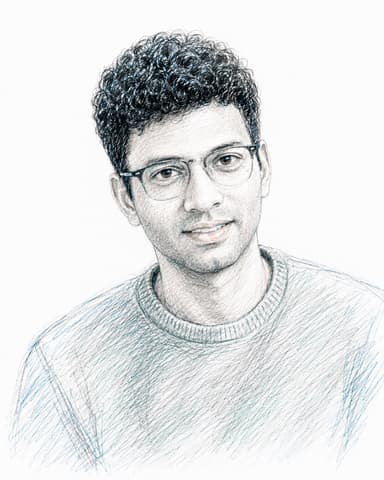
Anubhav Srivastava
Anubhav has spent the past two decades building machine learning and AI systems across startups, large enterprises, and high-scale consumer platforms. He has worked on patented AI technologies, authored books, and founded multiple ventures, and is currently building a deeptech startup focused on physical AI. Known for combining technical depth with practical thinking, he enjoys breaking down complex ideas into clear, accessible insights and is driven by a curiosity for how technology can solve real-world problems.
From our students
Engineers at different levels share what they built and what changed.
500+
Engineers trained
25+
Engineering leaders
40+
SaaS startups
50+
Alumni network
Alumni at
“The most technically rigorous program I've attended. No fluff — just pure deep-dives into transformer blocks and swarm logic. It's about understanding how LLMs actually work.”
Siddharth S.
Staff Engineer · Build Your Own LLM
“LangGraph and multi-agent orchestration was the missing link for our production pipeline. Essential for developers who need to move beyond single-prompt engineering.”
Elena R.
Senior AI Engineer · Agentic AI
“Direct access to instructors who are actually shipping AI products. The focus on evals-driven development is unique — we implemented their RAG evaluation approach across our entire startup.”
Arjun R.
Tech Lead · Claude Code
FAQ
Common questions about courses, formats, and what to expect.